Ashwagandha And The Thyroid: Two Case Reports, One Controlled Study
Alpha Erec’s own side-effects page gives ashwagandha one line about the thyroid: “linked to rare liver injury and to thyroid effects.” This article is the longer version of that line: the two published case reports behind it, and the one controlled study that went looking for the same signal on purpose.
- Two case reports, a 2005 report in a 32-year-old woman and a 2024 report in a 47-year-old man, each describe thyrotoxicosis that began after starting ashwagandha and resolved after stopping it (van der Hooft 2005, Hayashi 2024).
- A safety check inside an eight-week trial in people with bipolar disorder found thyroid hormone rose in the three ashwagandha-treated patients with thyroid data, while it mostly fell in the seven on placebo (Gannon 2014).
- None of the three sources studied healthy adult men taking a fixed daily dose for the reason Alpha Erec is sold.
- Two independent case reports, on two continents, nineteen years apart, describing the same direction of effect, is a real signal even though neither one proves cause on its own.
Why ashwagandha and the thyroid
Ashwagandha, the root of Withania somnifera, is sold as an adaptogen: a traditional-medicine category for herbs believed to help the body handle stress. Alpha Erec’s own article on this ingredient covers the stress and cortisol trials in full. What that article does not go deep on is a narrower, separate question that shows up as one line on the site’s side-effects page: a possible effect on the thyroid gland, the small organ at the base of the neck that sets the pace of much of the body’s metabolism.
The concern did not start with speculation. It started with clinicians reporting patients who developed thyroid problems after starting ashwagandha, followed by animal data suggesting the herb can raise circulating thyroid hormone. That sequence, a clinical observation followed by a mechanism worth checking, is exactly how pharmacovigilance is supposed to work, and it is worth reading in order.

The first case report: a 47-year-old man
In 2024, doctors in Japan described a previously healthy 47-year-old man who started taking ashwagandha and returned to hospital two months later with fatigue, night-time fevers, weight loss, diarrhoea and headache (Hayashi 2024). Blood tests showed thyrotoxicosis, an excess of thyroid hormone. An ultrasound of his thyroid showed an uneven internal pattern with no increase in blood flow, and a thyroid scan showed the gland was taking up almost no tracer at all.
That specific pattern, high thyroid hormone with low uptake on a scan, points to painless thyroiditis: the gland briefly leaking its stored hormone rather than manufacturing more, the same underlying process as some post-viral and post-partum thyroid flares. His symptoms and thyroid blood markers both improved after he stopped taking ashwagandha. The authors, in a plain statement of intent, wrote that the case “may spark important debate about whether ashwagandha is safe among healthy people, especially in thyroid toxicity.”
The second case report: a 32-year-old woman
Almost twenty years earlier, Dutch physicians described a 32-year-old healthy woman who began taking ashwagandha capsules for chronic fatigue (van der Hooft 2005). At first she took the capsules only occasionally and had no symptoms. After she increased the dose, she developed symptoms of thyrotoxicosis, confirmed on laboratory testing. Her symptoms resolved on their own, and her lab values returned to normal, once she stopped the capsules.
The authors noted that, at the time, this relationship had not previously been reported in a human, though animal studies had already suggested ashwagandha could raise thyroid hormone levels. Their conclusion was direct: the case suggested thyrotoxicosis is a potentially serious side effect of the herb. Notably, her symptoms tracked her dose: mild, occasional use produced nothing, and increasing the amount is what brought the reaction on.
What one case report can and cannot tell you
A case report is a single patient’s story, written up because a clinician noticed something worth flagging. It has real value: it is often the first place a rare drug or herb reaction ever gets described, and both of the reports above were written for exactly that reason. It also has real limits. One case cannot say how common a reaction is, cannot rule out coincidence, and cannot control for everything else happening in that one person’s life at the time.
What raises confidence here is that these are two independent reports, from different countries, nineteen years apart, in a man and in a woman, describing the same direction of effect: thyroid hormone rising after starting ashwagandha, and settling after stopping it. That pattern of independent, converging case reports is how a genuine but uncommon drug or herb reaction usually first becomes visible in the medical literature, well before anyone runs a trial designed to confirm it.
The one controlled study
The closest thing to a controlled check on this question came about almost by accident. Researchers running an eight-week, placebo-controlled trial of ashwagandha for cognitive function in people with bipolar disorder decided to track thyroid blood markers for safety, specifically because the 2005 case report and the animal data existed (Gannon 2014).
Of the sixty people in the original trial, only ten had an abnormal thyroid reading at the start or end of the study, and thyroid data with a known treatment assignment existed for just ten of them: three on ashwagandha, seven on placebo. Small as that is, the direction was consistent with the case reports. All three ashwagandha-treated patients with data saw their T4 (a main thyroid hormone) rise from baseline, by 7%, 12% and 24%. Six of the seven placebo patients saw T4 fall instead.
| Group | People with thyroid data | What happened to T4 |
|---|---|---|
| Ashwagandha | 3 | Rose in all three: 7%, 12%, 24% |
| Placebo | 7 | Fell in six of seven |
The study authors were careful about their own numbers, calling the changes “subtle” and noting the sub-analysis had not been the trial’s planned purpose, with unequal and very small group sizes. Their conclusion split the difference sensibly: the pattern was consistent enough to warrant watching for hyperthyroidism, while also raising a genuine question of whether a mild thyroid-raising effect could someday help people with an underactive thyroid. Either way, this was a signal found on purpose in nine people, not a settled finding in a general population.
Three sources, side by side
| Source | Design | Who | Finding |
|---|---|---|---|
| van der Hooft 2005 | Case report | 1 healthy woman, 32 | Dose-dependent thyrotoxicosis, resolved on stopping |
| Hayashi 2024 | Case report | 1 healthy man, 47 | Painless thyroiditis two months after starting, resolved on stopping |
| Gannon 2014 | Safety sub-analysis inside an RCT | 3 ashwagandha, 7 placebo, in bipolar disorder | T4 rose on ashwagandha, mostly fell on placebo |
Read on their own, each source is limited: two single patients and a nine-person sub-analysis inside a trial built for an unrelated condition. Read together, all three point the same direction, in three different settings, which is a stronger basis for caution than any one of them alone, while still falling well short of a trial designed and powered to answer the thyroid question directly in the population Alpha Erec is sold to.
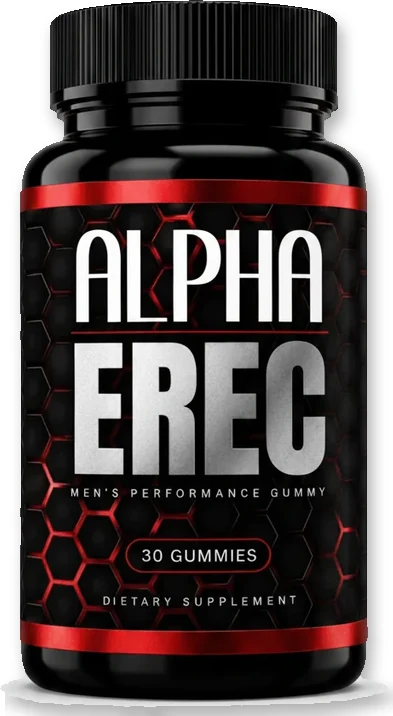
Order Alpha Erec: one gummy a day, six named ingredients
Ashwagandha is one of six named ingredients. Checked your medicines and any thyroid history first? The full interaction notes are on the side-effects page.
Packs of 2, 3 or 6 bottles · 60 days to change your mind
Choose Your Alpha Erec PackOne gummy a day, with or without food · ships from the United States
How this fits Alpha Erec
Ashwagandha root is one of six named Alpha Erec ingredients, alongside L-arginine HCl, horny goat weed, tribulus terrestris, maca root extract and Panax ginseng. This site’s main ashwagandha article covers the stress, cortisol and hormone trials behind the ingredient; this one exists because the thyroid line on the safety page deserved its sources spelled out rather than left as a single sentence.
No milligram amount or extract standard for ashwagandha has been published on this site, so, as with every ingredient here, the amount in one gummy cannot be set beside the doses used in any of the three sources above. What can be said plainly is who should raise this with a doctor before starting: anyone with a known thyroid condition, anyone on thyroid medicine, and anyone who develops symptoms like fatigue, weight change, or a racing heart after starting a new supplement.
Both case reports above describe symptoms that built up over weeks: fatigue, fever, weight change, a fast heartbeat. Anyone noticing a pattern like that after starting ashwagandha, in any product, has a reasonable case for a doctor’s visit and a thyroid blood test.
Questions buyers ask
Does ashwagandha definitely affect the thyroid?
Not definitely, but there is a consistent signal: two independent case reports and a small safety sub-analysis inside a trial all point the same direction. No trial has been designed specifically to settle the question in a general population.
Were the people in these reports taking Alpha Erec?
No. The case reports describe ashwagandha capsules taken on their own, and the controlled study used a Withania somnifera extract in a trial for bipolar disorder. None involved Alpha Erec or its other five ingredients.
Should I get a thyroid test before taking a supplement with ashwagandha?
Anyone with a thyroid condition, or on thyroid medicine, should talk to a doctor first regardless. For everyone else, watching for new fatigue, weight change or a racing heart after starting is a reasonable middle ground.
The short answer
Ashwagandha’s link to the thyroid rests on two case reports, in a man and in a woman, describing thyroid hormone rising and then settling around starting and stopping the herb, plus a small safety check inside an unrelated trial that found the same direction in nine people. That is a real, converging signal, not a single fluke, and also not a dedicated trial in Alpha Erec’s own target population. The plain conclusion is the one already on this site’s side-effects page: anyone with a thyroid condition or on thyroid medicine should ask a doctor before starting.
Sources cited in this article
- Hayashi M, Hamada H, Azuma SI, Hayashi K. Painless Thyroiditis by Withania somnifera (Ashwagandha). Cureus. 2024;16(3):e55352. https://pubmed.ncbi.nlm.nih.gov/38559552/
- van der Hooft CS, Hoekstra A, Winter A, de Smet PA, Stricker BH. [Thyrotoxicosis following the use of ashwagandha]. Ned Tijdschr Geneeskd. 2005;149(47):2637-8. https://pubmed.ncbi.nlm.nih.gov/16355578/
- Gannon JM, Forrest PE, Roy Chengappa KN. Subtle changes in thyroid indices during a placebo-controlled study of an extract of Withania somnifera in persons with bipolar disorder. J Ayurveda Integr Med. 2014;5(4):241-5. https://pubmed.ncbi.nlm.nih.gov/25624699/